
A review of a novel that leads to some other recommendations on creativity, if you’re interested …
Overall: 4/5
Tomorrow and Tomorrow and Tomorrow
Gabrielle Zevin
Published 2023
Amazon (affiliate link)
Zevin’s excellent novel serves up both a very good story about two people who love one another (and hate one another) in a way that confuses everyone else, and as an expiration of creativity as a force of collaboration rather than individual effort.

In that regard, and since the creative setting is a video game studio, I am reminded of the Mythic Quest show* on Apple TV which delves into similar themes and dynamics (in the characters Poppy and Iain, among other pairings). Zevin gives us a solidly written work that takes the reader back and forth through time to explore the creative and personal relationship between Sam Mazer and Sadie Green.
As a student of both game design and creativity, I appreciated the story and its themes. I’m not entirely sure why this book (of all books) topped so many “best works” lists among my friends, but it was their recommendation that got me to read it. (A lot of my friends work in fields that demand collaborative creativity, so perhaps we all resonated with the themes.)
But for sheer quality in the sentence to sentence writing and the overall story construction, I think this one deserves a solid 4/5 from me. Not the absolute best book I read all year (that prize goes to The Heart’s Invisible Furies), but certainly one that I enjoyed spending time with and am happy to recommend to others.
*About Mythic Quest: This show punches above its weight class in season 2 particularly. The general plot is to follow the machinations of various folks working at a video game studio with all the egos and insecurities on display as both entry-level and established employees wrestle with their problems and conflicts.
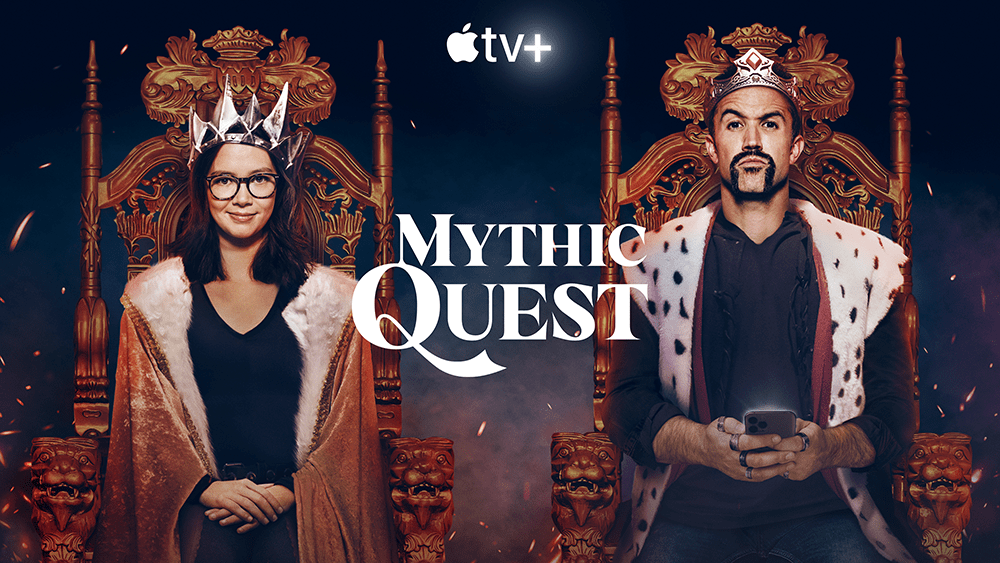
But by season 2, something really magical is happening in the way the story arcs unfold. There’s an episode starring F. Murray Abraham and John Hurt which really deserves an award nomination of some sort for the lovely storytelling: the unfolding and resolution of a rivalry between two old science fiction writers.
MQ drops off in quality by season 3, partly because the pandemic slammed into their schedule and they never really recovered from the disruption, and the plot lines are also less fulfilling. But for 1-2 seasons, the show meditates (via comedy) on why creativity rarely succeeds in isolation, while the collaborations that spark brilliance are often fraught with tension and conflict.**
**If you’re looking to round out your readings on creativity-within-collaboration, may I suggest Walter Isaacson’s book The Innovators (Amazon), which covers the history of innovation within computer science from Ada Lovelace and Babbage’s analytical engines in the 1800s through the early 21st century. The best writing in the book covers the early 1900s through about 1980 when the microprocessor was invented, leading to an explosion of home PCs and IBM clones. (You can stop reading at whatever point you lose interest; for me it was around 1980.)
What I love about Isaacson’s work is his focus on the thesis that creativity almost cannot work in isolation. The most productive and innovative teams in the golden area of Bell Labs and PARC or during the rise of Silicon Valley and even the early vacuum tube behemoth computers like ENIAC were composed of both a dreamy idea person who understands the theory and the possibility space of their materials and tools + a practical “get it done” engineer-type who was possessed with the spirit of getting a prototype churned out to see if the idea actually works.
You need BOTH of these people to birth innovation: an idealist to envision the possibility linked to a hard-nosed realist who will make it happen and solve the technical challenges. Almost no one has that entire package in themselves, and even when isolated inventors managed to hit a Big Idea™ on their own, they rarely succeeded in getting it to market or to patent ahead of other teams working on similar breakthroughs.
What Zevin explores through fiction, Mythic Quest illustrates on screen, and Isaacson explains through examples. A nice trio!
I participate in the Amazon Services LLC Associates Program, an affiliate advertising program designed to provide a means for sites to earn advertising fees by advertising and linking to Amazon.com. If you click on an Amazon link from one of my blog posts, I might earn a cent or two. So thank you for clicking through links – it helps me out!
 just:words
Got a comment?